
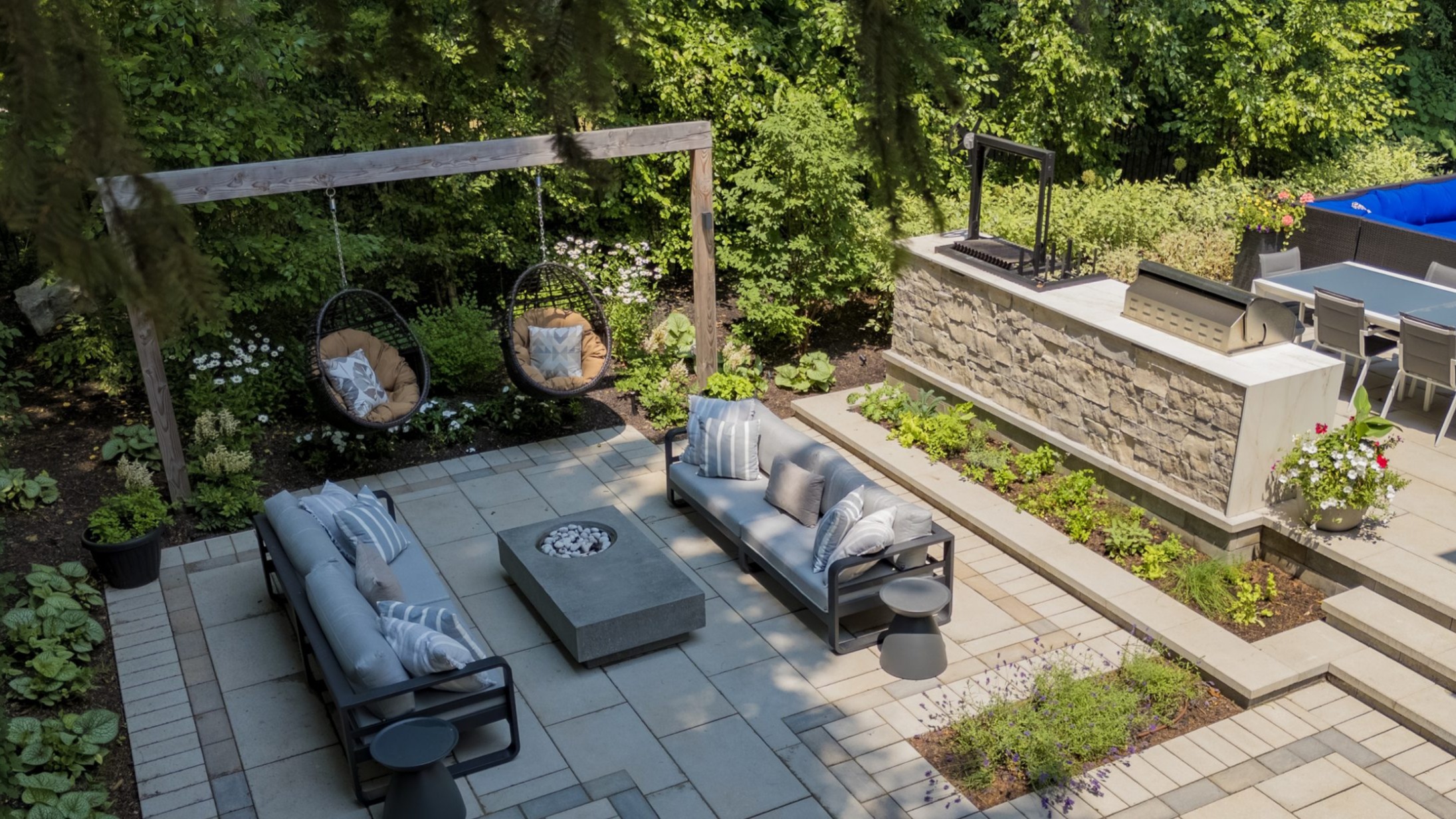
Why Material Selection Is Different in the GTA
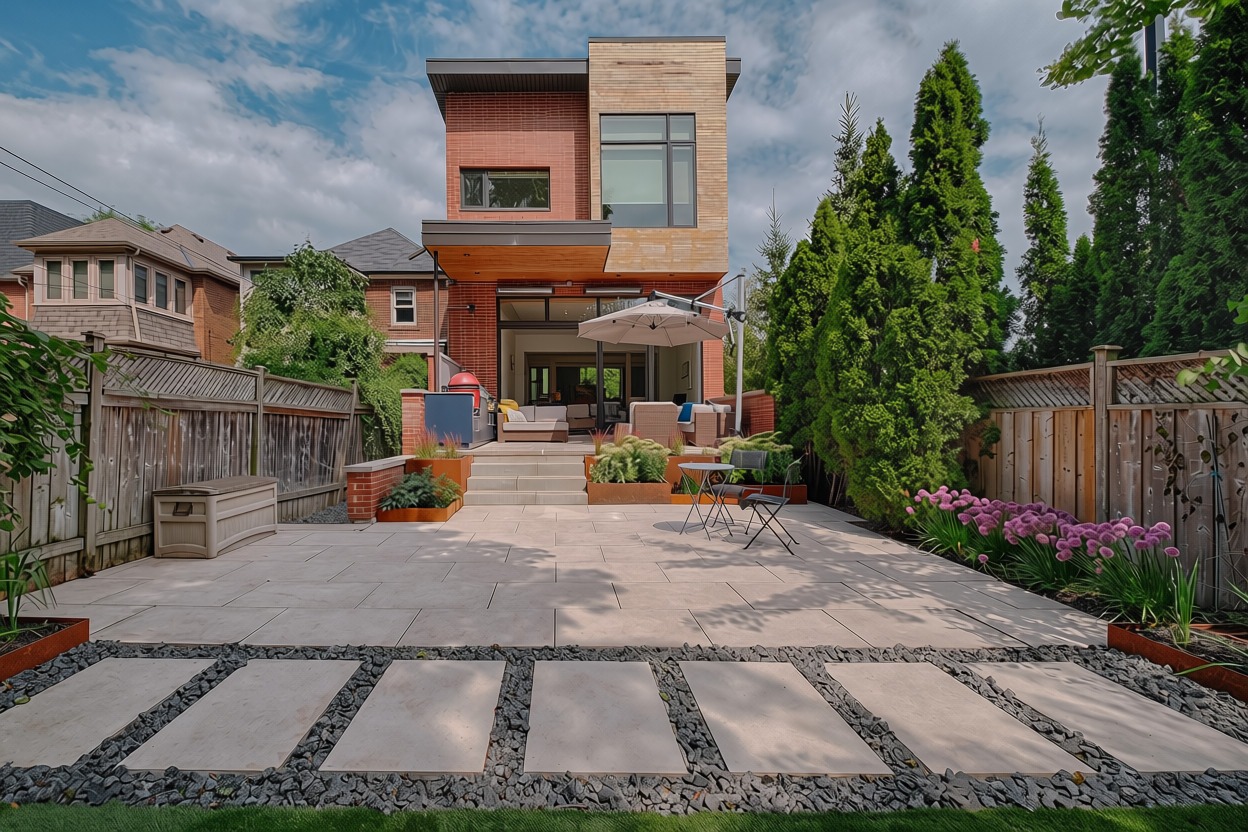
Because Toronto experiences so many freeze-thaw cycles every year, materials that perform well in milder regions often fail here after just a season or two. Our local climate makes choosing materials for a Toronto outdoor kitchen a fundamentally different process from what you find in generic national guides, and it all comes down to three destructive forces.
First is freeze-thaw cycling, where trapped water expands as it freezes and cracks stone or grout from within. Second is thermal shock, which occurs when high-heat grills create extreme temperature swings that fracture unrated backsplashes, countertops, and surrounding joints. Third is the combined toll of summer humidity and intense UV exposure, which warps unsealed wood and degrades resin-based composites. Standard guides simply do not account for this mix of extremes.
Keep reading to learn more about how to select outdoor kitchen materials that can handle Southern Ontario winters. For more on the full design-build process, check out our full guide to outdoor kitchens in Toronto and the GTA.
Step 1 – Choose Your Countertop Material
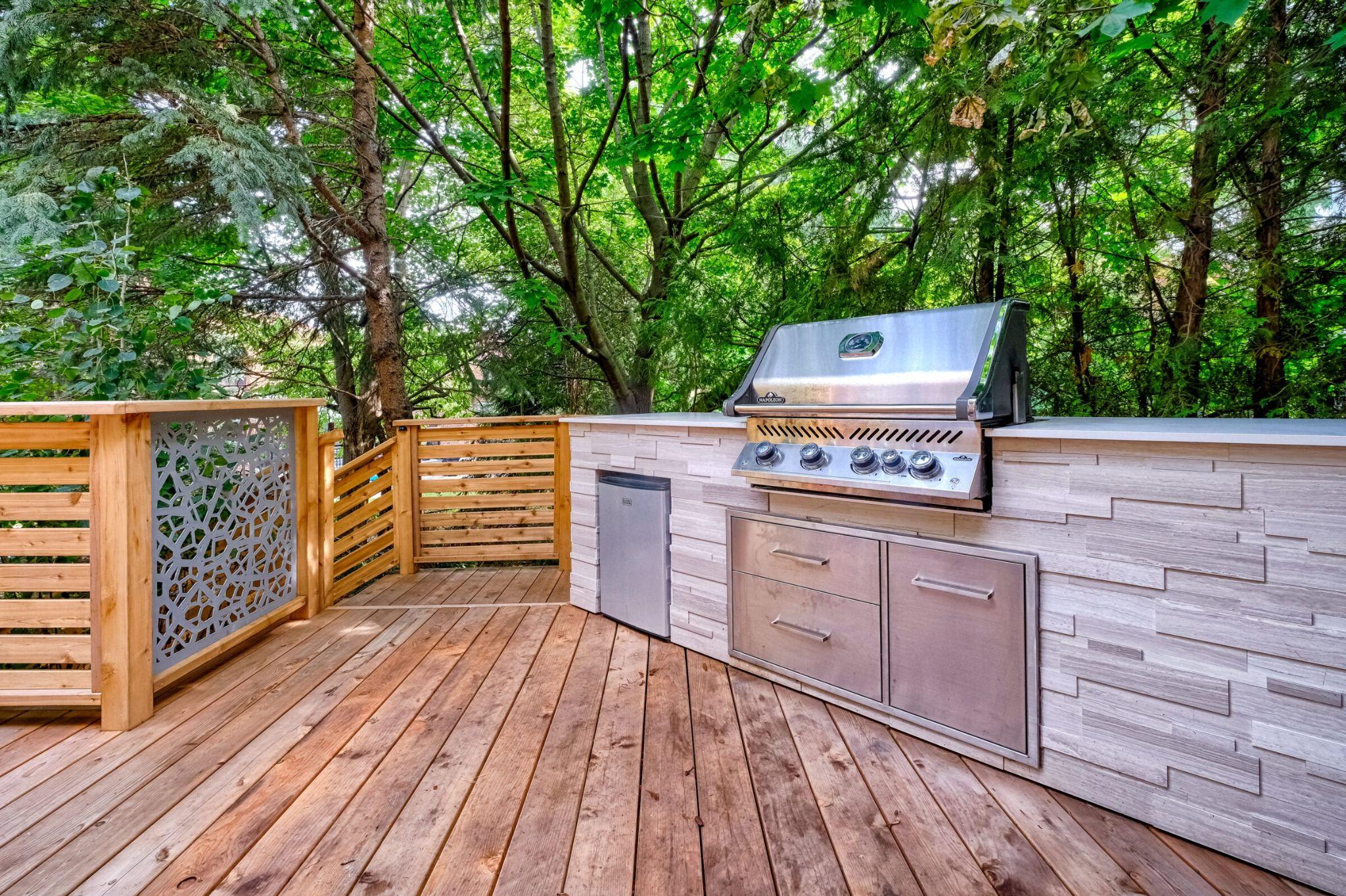
Porcelain (Recommended for Most Toronto Outdoor Kitchens)
Porcelain is the ideal default specification for outdoor kitchen countertops in Toronto. It is frost-rated (PEI Class V), non-porous, requires no annual sealing, is completely UV-stable, and is available in large-format slabs that replicate natural stone. Because it is non-porous, porcelain will not absorb grease, red wine, or food spills around prep and cooking zones. Before ordering, request a technical data sheet from your installer to confirm the product carries a verified frost-resistance rating.
Limitations: Porcelain is brittle (a dropped cast-iron pan can chip an exposed corner) and requires setting mortar rated specifically for exterior freeze-thaw conditions rather than standard interior thinset.
Quartzite and Granite (Good Performance With Annual Maintenance)
Dense natural stone performs reliably through local winters when properly sealed. It is critical to distinguish quartzite from interior engineered quartz: quartzite is a 100% natural metamorphic stone formed under intense geological heat and pressure. It is significantly harder and less porous than granite, making it an exceptional natural stone choice for outdoor use. Both granite and quartzite require a penetrating sealer applied each spring; if maintenance is skipped, the stone will begin absorbing moisture and oils.
What to avoid: Marble and travertine. Both are calcite-based, highly porous, and will pit and spall within two to three winters regardless of how often they are sealed.
Stainless Steel (Modern & Climate-Impervious)
Stainless steel handles Toronto freeze-thaw cycles effortlessly. While it may not suit traditional architectural styles in classic Toronto neighbourhoods, it is an exceptional choice for modern designs, secondary prep surfaces, or grill surrounds due to its outstanding weather resistance, hygiene, and heat tolerance.
Limitations: Stainless steel will pit and discolour if exposed to pool chlorine or salt-water splashback, and it can become extremely hot to the touch in direct midday summer sun.
Poured Concrete (Requires Specialized Treatment)
Poured concrete offers a custom, seamless industrial look, but ensuring it survives local winters requires an exacting fabrication process.
Why we recommend alternatives: Concrete requires costly freeze-thaw additives, internal reinforcement, and strict yearly sealing just to prevent cracking. Non-porous options like porcelain deliver the same clean look with none of the maintenance headaches.
Not sure which materials are right for your project? Our team specifies materials for the GTA climate on every job. Schedule a consultation, and we’ll walk you through the options for your specific lot and design.
Step 2 – Choose Your Structure and Cladding Material
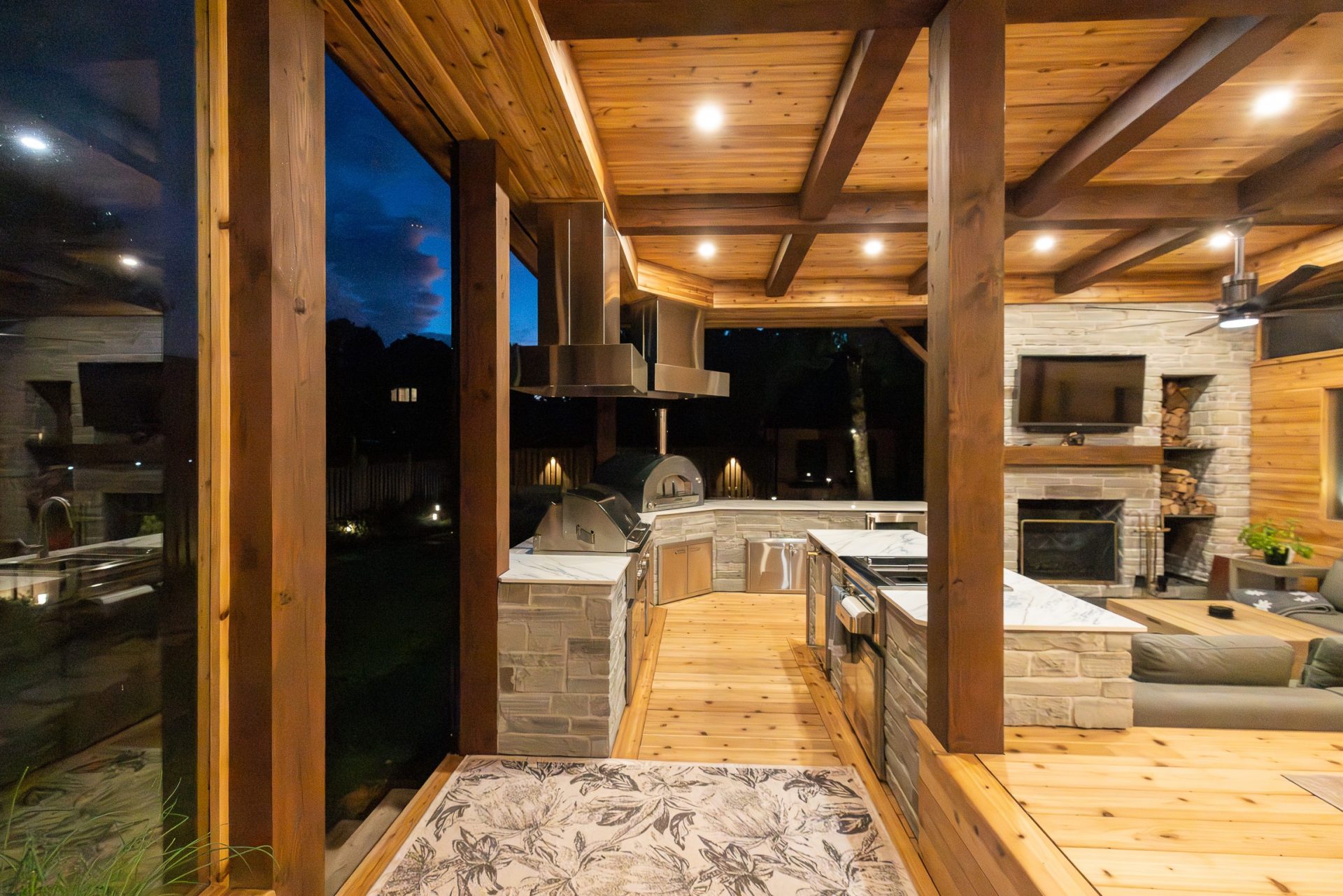
Concrete Masonry Unit (CMU) Block – The Industry Standard
The CMU block is the correct base structure for any permanent outdoor kitchen installation in Toronto. It does not absorb moisture, does not rot, and does not move with frost heave when founded on a proper footing below the frost line (1.2 metres in the GTA, per the Ontario Building Code frost-line requirements). Any permanent structure must be founded below the frost line; a footing at or above grade will heave within a few winters and crack everything above it. This is a building code requirement, not a design preference, that every qualified hardscape contractor in Toronto understands.
Cladding options over CMU include natural stone veneer, manufactured stone veneer, brick, powder-coated aluminum cladding, fibre cement board, and direct-applied porcelain tile, all of which are compatible with CMU in the GTA climate. The cladding choice is where design differentiation happens; a solid base of CMU or metal stud framing is non-negotiable.
Steel & Aluminum Framing (Lightweight Alternative)
Steel and aluminum stud framing offer an excellent lightweight, non-combustible structural alternative to CMU block. They are ideal for weight-sensitive decks, rooftop terraces, or elevated patios where pouring a concrete footing or supporting heavy masonry is impractical. Unlike wood, metal framing does not warp, rot, or absorb moisture, providing a dimensionally stable base for countertops and cladding.
Stone Veneer Cladding
Stone veneer over CMU is the dominant cladding in Forest Hill, Rosedale, and Lytton Park, as it reads as an architectural extension of the home rather than an add-on. Natural stone (limestone, granite, quartzite, fieldstone) is permanent and requires correct mortar and expansion detailing. Manufactured stone veneer is simply a more cost-effective alternative to natural stone.
What Not to Use as a Structural Base
Wood-frame structures rot at the base in the GTA’s clay-heavy soil; even pressure-treated lumber deteriorates faster than CMU. Big-box wood-frame kits are not appropriate for a permanent installation. Aluminum stud framing is a great structural alternative to CMU block, particularly for elevated decks, rooftop terraces, or weight-sensitive areas where pouring a heavy concrete foundation isn’t possible. Experienced hardscape contractors in Toronto build on CMU or metal framing as a standard practice.
Step 3 – Choose Your Cabinetry and Storage
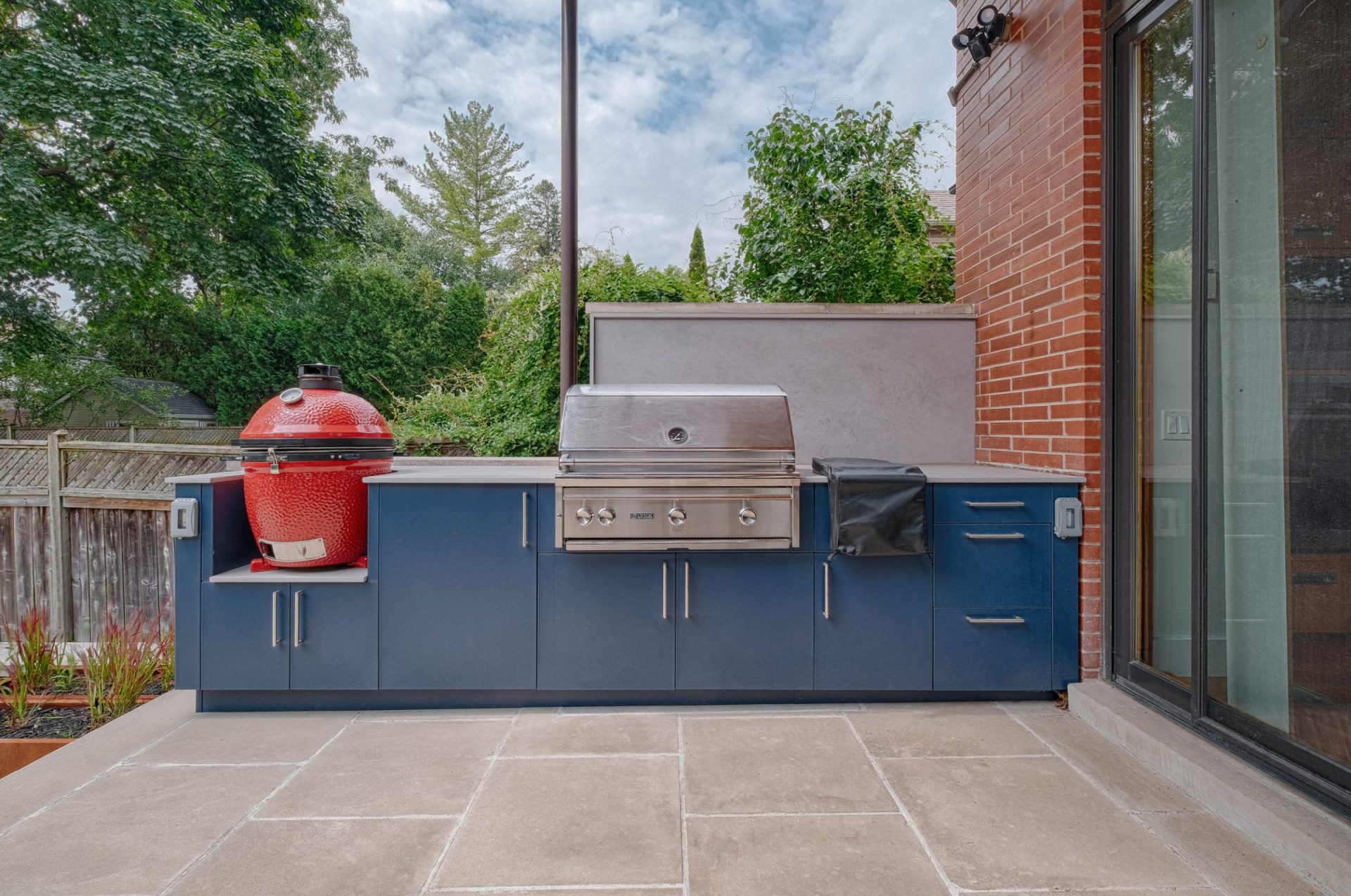
Powder-Coated Aluminum Cabinetry (Recommended)
Powder-coated aluminum cabinetry provides the best overall performance for outdoor kitchens in Toronto. Unlike steel, aluminum is naturally rust-proof and will not corrode, swell, or warp when exposed to extreme freeze-thaw cycles or high humidity. The factory-applied powder coating creates a durable, UV-resistant barrier that protects against scratching and fading while giving the cabinetry a modern finish. It easily handles thermal expansion near high-heat grills and requires no seasonal winterizing or covers.
Powder-Coated Stainless Steel Cabinetry (Acceptable)
Stainless steel cabinetry with a powder-coated finish offers strong UV resistance and a sleek aesthetic. However, powder coatings can chip along door edges over time. If selecting stainless steel cabinetry, specify 316 marine-grade stainless steel throughout to prevent surface rust on exposed edges, hardware, and fasteners.
What Not to Use for Cabinetry
Do not use wood. Teak, cedar, pressure-treated lumber, and plywood-based cabinet boxes are completely unsuited for Toronto outdoor kitchens. Teak expands near grill heat and requires constant oiling; cedar presents moisture issues and fire risks near open flames; and plywood boxes delaminate rapidly as moisture penetrates the seams through freeze-thaw cycles.
Step 4 – Choose Your Flooring and Surrounding Patio Material
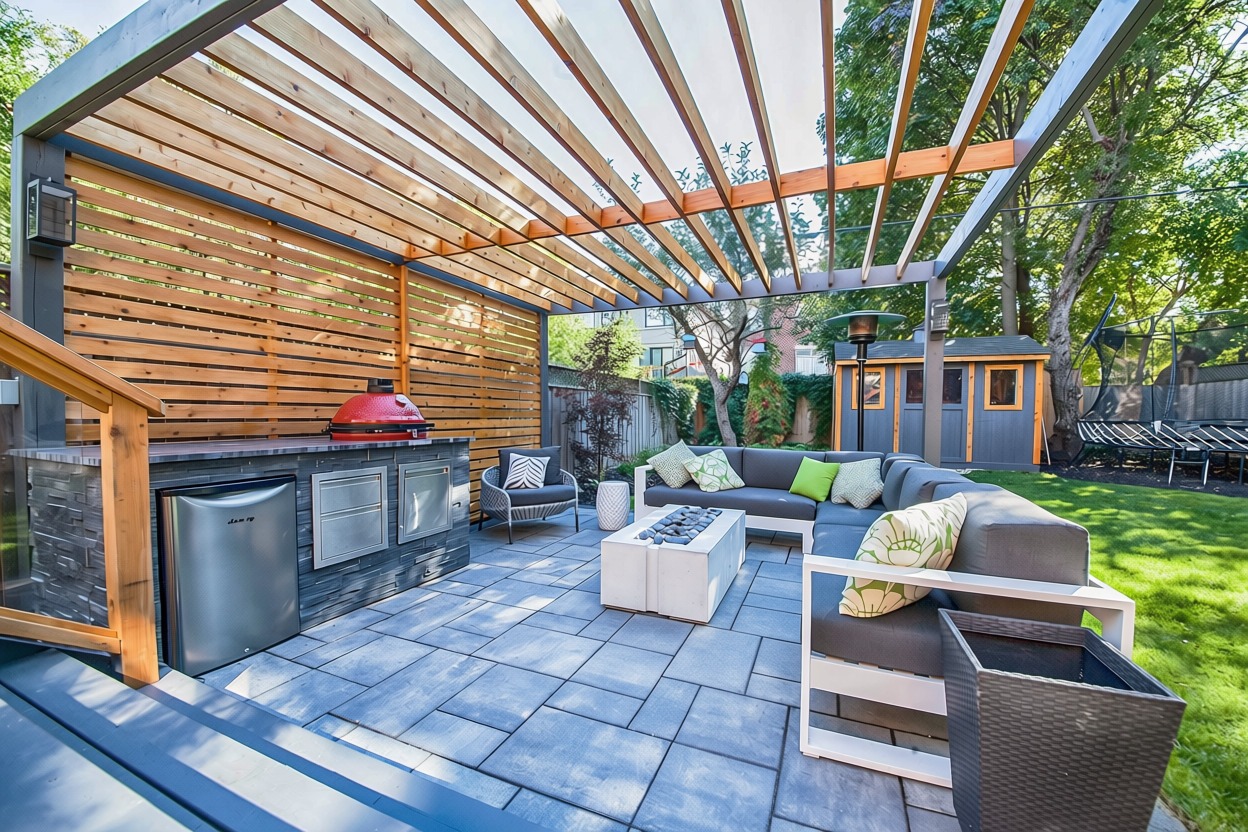
Outdoor kitchen patio surfaces must be frost-rated. The same freeze-thaw cycles that crack an improper countertop will destroy the surrounding stonework. Beyond winter performance, the area directly in front of your cooking and prep zone requires careful surface selection: food spills, red wine, and hot grease will permanently stain porous stone if it is left unsealed.
Porcelain Pavers (Recommended & Best Overall)
Porcelain pavers are the top recommendation for outdoor kitchen flooring. They are non-porous, naturally frost-rated, and completely impervious to grease, wine, and oil stains around cooking areas. Unlike natural stone or poured concrete, porcelain pavers never require annual sealing to maintain their appearance and stain resistance.
Concrete Pavers (Interlocking)
To perform reliably through winter, interlocking concrete pavers must be specified at a minimum thickness of 60mm. They provide a durable surface, and if individual units ever heave or stain over time, they can be easily replaced without disturbing the surrounding patio. Concrete pavers should be sealed regularly to protect against food and grease stains.
Natural Stone (Granite, Bluestone)
Natural stone performs exceptionally well through freeze-thaw cycles when installed on a compacted granular base with proper joint detailing. Because natural stone is porous, it requires a high-quality penetrating sealer applied regularly to prevent grease and wine spills from sinking into the grain. Avoid sandstone and porous limestone entirely, as they absorb water rapidly and spall during freeze-thaw cycles.
Poured Concrete
Poured concrete delivers a clean, seamless look, but because cracking is permanent and surface damage requires replacing the entire slab, control joints must be precisely engineered to accommodate seasonal ground movement. Like natural stone, poured concrete is porous and must be kept sealed to prevent deep staining in kitchen work areas.
For design ideas that incorporate these patio materials with specific kitchen configurations, read our blog on outdoor kitchen design ideas for Toronto backyards.
A Quick Reference: Material Recommendations for Toronto Outdoor Kitchens
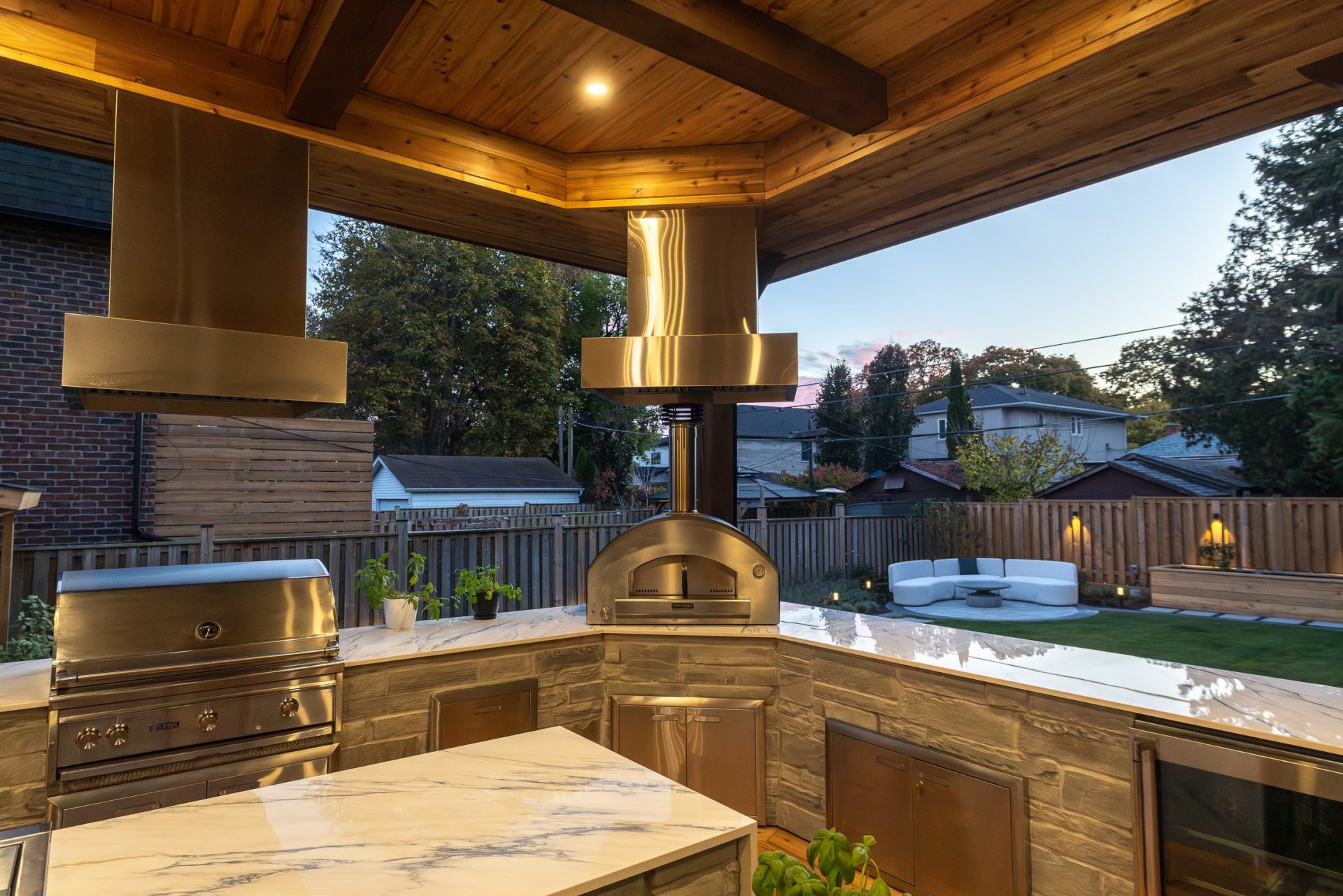
Here is a quick-reference summary of recommended and acceptable materials for outdoor kitchen builds in Toronto’s climate:
- Patio Surface: Porcelain pavers (recommended – non-porous, no sealing required); 60mm frost-rated concrete pavers or sealed natural stone such as granite or bluestone (acceptable, but both require ongoing sealing to prevent food and grease stains); avoid sandstone, porous limestone, and standard clay brick.
- Countertop: Frost-rated porcelain (recommended); sealed natural granite or quartzite (acceptable with annual maintenance); exterior-mix poured concrete (acceptable with specialized treatment); avoid marble, travertine, and standard ceramic tile.
- Structure Base: CMU block or aluminum/steel stud framing (recommended – the correct base options for a permanent installation); avoid wood framing and standard plywood.
- Cladding: Natural or manufactured stone veneer, powder-coated aluminum, and fibre cement board (recommended); avoid untreated wood and interior-rated finishes.
- Cabinetry: Powder-coated aluminum (recommended); powder-coated 316 marine-grade stainless steel (acceptable); avoid teak, cedar, pressure-treated lumber, and plywood-based laminates.
Work With a Contractor Who Specifies Materials for Toronto’s Climate
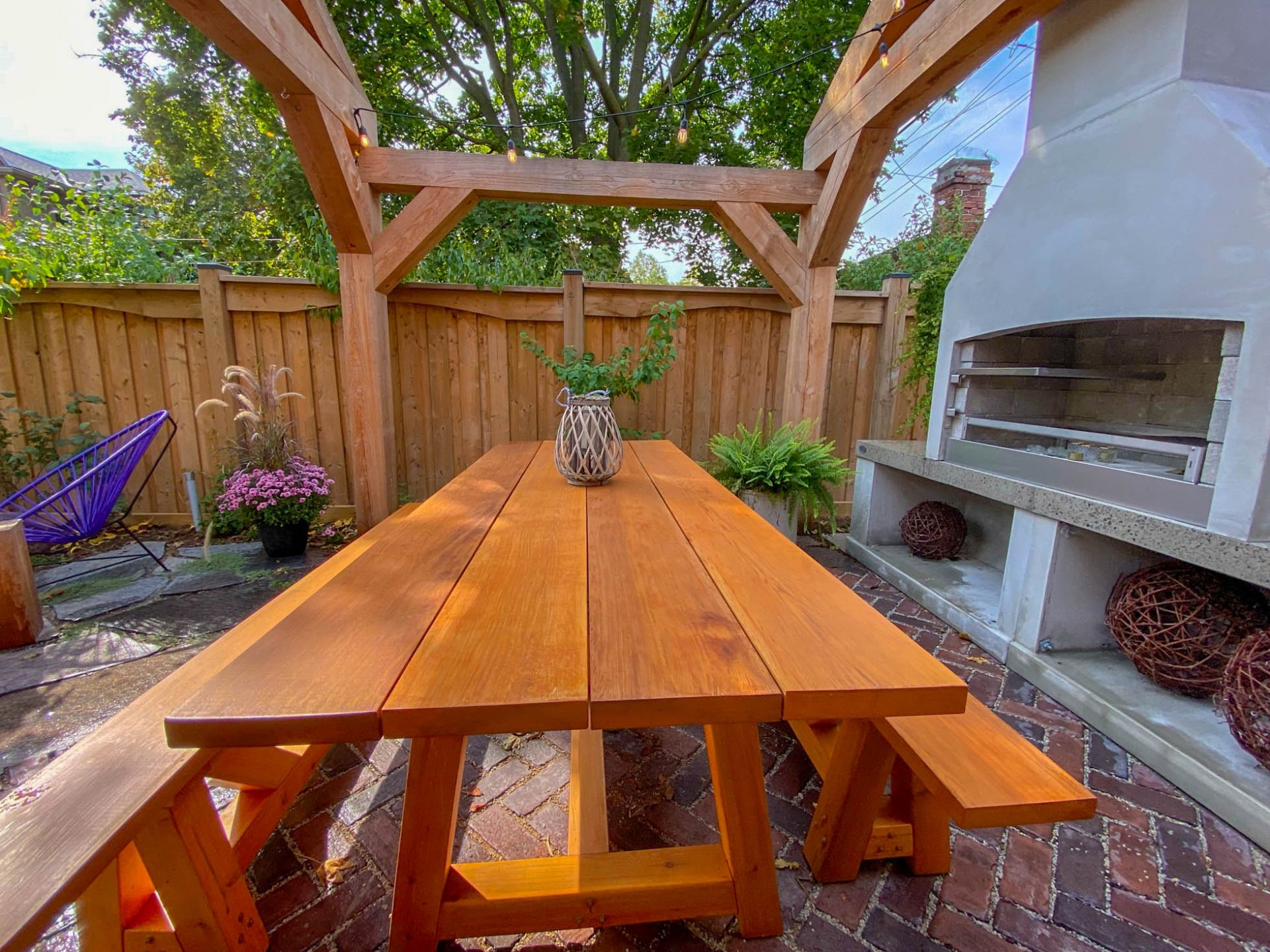
Getting the material selection wrong for an outdoor kitchen means a rebuild within 5 to 10 years. Structural damage to the CMU base, water ingress, and failed cabinetry typically result in repair costs equal to or greater than the original build cost. When evaluating options, Toronto homeowners should shortlist based on a straightforward hiring criterion: ask for a written material specification with technical data sheets for every material before construction begins. A contractor who cannot produce this is specifying based on habit rather than climate performance.
In Toronto, a qualified hardscape team treats every hardscape surface and kitchen component the same way: prioritizing frost rating first, long-term maintenance second, and visual appeal third. If you are vetting local contractors, Landscape Ontario’s verified member directory is a reliable place to confirm a firm’s licensing and standing in the industry.
Material selection is the most critical decision in any outdoor kitchen or hardscaping project. Review our guide on the top 10 outdoor kitchen planning mistakes to see where else projects go wrong, or explore our full design-build guide when you are ready to move from research to detailed specification.
Ready to build an outdoor kitchen that lasts? Schedule a consultation with Infinite Possibilities. We’ll specify materials, pull permits, and handle the full build. Plus, every project is backed by a one-year warranty.
Summary
Material selection is the most consequential decision in any outdoor kitchen build. Toronto’s many annual freeze-thaw cycles, clay-rich soil, and humid summers render many materials that perform acceptably in milder climates ineffective here. Choices like frost-rated porcelain, CMU or aluminum framing, stone veneer, powder-coated aluminum cabinetry, and porcelain pavers are essential for long-term durability. Specify by climate performance first, aesthetics second, and verify every material with a technical data sheet before breaking ground.